





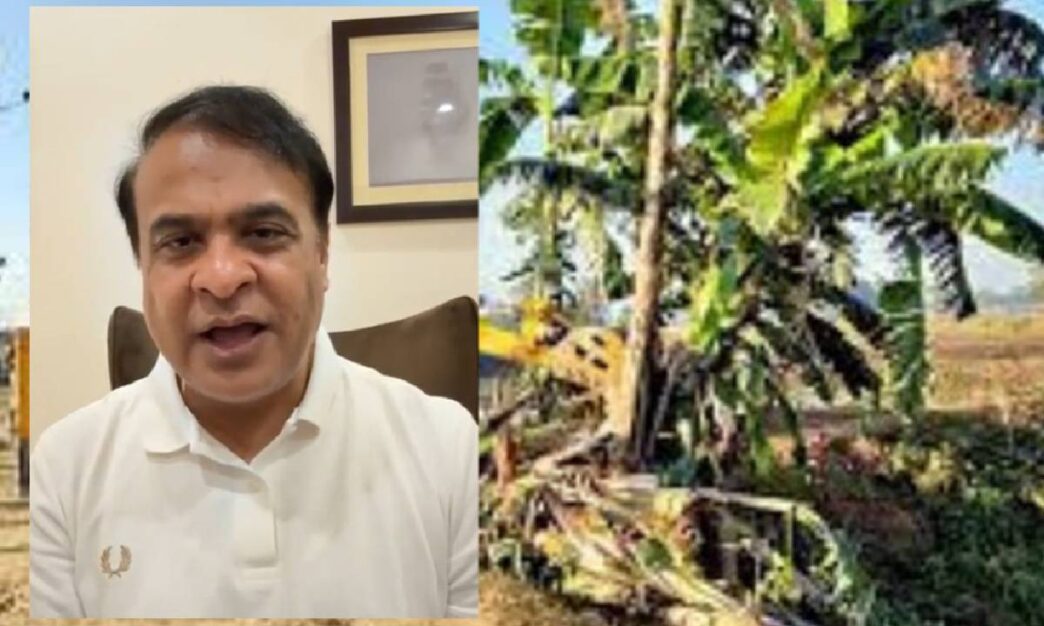
The Assam government is preparing to launch a large eviction drive in the Dahikata Reserved Forest area of Goalpara district on November 9 and 10. According to Chief Minister Himanta Biswa Sarma, nearly 1,000 bighas of encroached forest land will be cleared as part of the government’s ongoing effort to protect Assam’s forests from illegal occupation.
“This forest land belongs to the people of Assam. We will protect it and we will fight for it,” said Chief Minister Sarma. The government maintains that the upcoming eviction drive is aimed at reclaiming forest land that has been under illegal occupation for several years.
The operation at Dahikata is one of the latest in a series of eviction drives being carried out across the state to free encroached forest land. In recent months, similar operations were conducted in places such as the Paikan Reserve Forest, also in Goalpara, where more than 1,000 bighas were cleared. Officials have said that the Dahikata eviction will be carried out with the help of the district administration and the forest department. 
The Dahikata Reserved Forest, spread across several villages, has long been in the news for encroachment and environmental degradation. It is an area known for its Sal trees and for being part of the elephant corridor in western Assam. Over the years, parts of the forest have been cleared by settlers, and there have been frequent reports of illegal felling of trees.
In October 2023, the issue gained attention when locals in nearby Mornoi protested against the cutting down of trees inside the Dahikata Reserved Forest. Villagers claimed that around 2,000 Sal trees were being felled to set up an office for Bharat Petroleum Corporation Limited (BPCL). They alleged that the forest department had no right to allow tree felling inside a reserved forest. The protest led to heated scenes at the site, with locals physically stopping the workers from cutting the trees.
At that time, some residents accused forest officials of protecting those responsible for the tree cutting instead of safeguarding the forest. “We are paying taxes to the forest department so that they protect the trees. Today they are cutting them down in a protected forest area. What right do they have to do that?” a local resident had said during the protest.
The October 2023 episode exposed a deeper conflict between conservation efforts, industrial interests, and the rights of local communities. It also raised questions about how forest resources are being managed and who gets to decide what happens inside reserved forests. With the upcoming eviction drive, similar questions are being asked once again — but this time, they concern people’s homes and livelihoods.
The government’s position is clear. Officials say that reclaiming forest land is necessary to restore Assam’s ecological balance and reduce human–elephant conflicts, which have risen sharply due to forest loss. According to official data, more than 3,600 square kilometres of forest land in Assam is currently under encroachment, one of the highest figures in the country. The state government has set a ten-year goal to clear all encroachments from forest land while ensuring that the rights of indigenous and tribal people under the Forest Rights Act are protected.
Chief Minister Sarma has repeatedly said that the eviction drives are not meant to target any specific community but to protect “jati-maati-bheti” — the identity, land, and home of the Assamese people. “Encroachment is not only about land; it is about the future of Assam,” he said in an earlier public meeting.
Questions also remain about whether those who will be affected by the Dahikata eviction have received proper notice or assistance. In previous drives elsewhere in Assam, several families said they were given little time to move out, and many complained that they had no place to go after the eviction. The government has promised to provide alternative land to genuine landless citizens, but ground reports from earlier operations suggest that rehabilitation measures have often been limited.
Another concern is the legal status of the settlements in Dahikata. Some residents have reportedly applied for recognition of their land rights under the Forest Rights Act, but the verification process remains unclear. Human-rights activists say that evictions should not take place until these claims are properly reviewed. Without that, they argue, the drive could displace poor families who may actually have a legal right to stay.