



On what would have been his 53rd birthday, Assam and millions of fans across India remember the irreplaceable Zubeen Garg, a voice that shaped a generation, a cultural icon whose loss still feels unreal. But even as admirers celebrate his legacy, new revelations have deepened the mystery and anger surrounding his untimely death.
Fresh disclosures under the Right to Information (RTI) Act have now confirmed that the North-East India Festival in Singapore, the event Zubeen was scheduled to perform at — was not an independent cultural programme, as claimed earlier. Instead, it was organized under direct government sponsorship, with the Indian High Commission in Singapore playing the central role. These revelations have raised serious questions about oversight, negligence, and accountability.
Government’s Deep Involvement Exposed
The festival, held from September 19–21 in Singapore, was officially organized by the Indian High Commission. An April 2025 letter from High Commissioner Dr. Shilpak Ambule to Chief Minister Himanta Biswa Sarma explicitly invited the CM to the festival and requested financial assistance from the Assam government.
The same letter stated that Shyamkanu Mahanta, widely known to be close to the Chief Minister, would coordinate Assam’s participation. The Chief Minister forwarded the letter to Chief Secretary Ravi Kota with instructions to “please discuss,” following which the matter was escalated to the Act East Policy Department with advice to consult the Ministry of External Affairs.
These RTI documents make one fact undeniable:
The Assam government, the High Commission, and top officials were fully aware of and involved in the festival’s planning.
This directly contradicts earlier public statements suggesting minimal or no government involvement.
Negligence in Ensuring Zubeen’s Safety
Despite the official nature of the festival, Zubeen Garg, a national cultural icon, was not provided with adequate security or safety arrangements during the event. This glaring lapse has become a flashpoint of public anger.
Cultural groups, artists, opposition parties, and ordinary citizens have questioned how a government-sponsored international festival could fail to ensure even basic protection for a celebrity of Zubeen’s stature.
Political Leaders Question the Cover-Up
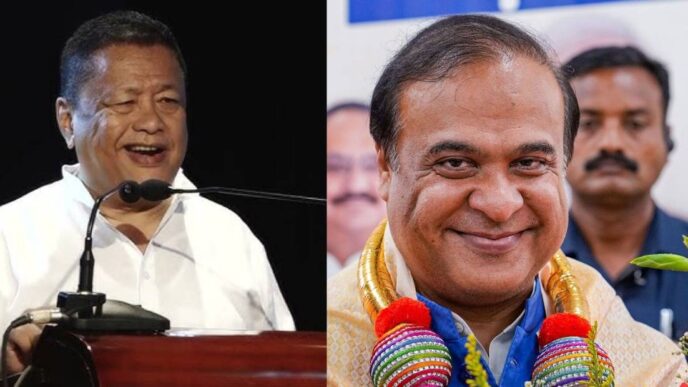
Raijor Dal leader Rasel Hussain, in a strongly worded press conference, stated:
“The Assam government and the Ministry of External Affairs had been in constant communication regarding this festival. Yet when it came to Zubeen Garg’s safety, nothing was done. Key people like Shyamkanu Mahanta and Pabitra Margherita have not been brought under investigation. This is unacceptable.”
His remarks reflect a growing belief that the government tried to distance itself from the event only after Zubeen’s death.
Bidyut Saikia of the Krishak Mukti Sangram Samiti echoed these concerns:
“The Chief Minister was fully aware of the festival. Pavitra Margherita, a minister and close friend of Zubeen, organized the festival under her ministry. Yet she is not part of the investigation. The RTI documents clearly show that the High Commission organized the festival with coordination from Shyamkanu Mahanta. The lack of protection is alarming.”
RTI Documents Contradict Official Claims
The April 19 letter from High Commissioner Ambule outlines the festival’s objectives — strengthening trade, tourism, and cultural relations as part of the 60th anniversary of India-Singapore ties. It formally sought Assam’s participation and financial support.
These documents categorically contradict claims made by some organizers that the Assam government had no involvement.
Meanwhile, the Ministry of External Affairs has refused to release additional details under RTI, citing “ongoing investigations,” which critics argue only deepens suspicion.
Public Outrage and Demands for Justice
Zubeen Garg’s death has become more than a personal tragedy. Fans and cultural activists are demanding:
• A full, transparent, and independent investigation
• Accountability from all officials involved
• Inclusion of key organizers like Shyamkanu Mahanta and Pabitra Margherita in the probe
Social media is flooded with tributes as well as demands for justice. Online petitions and campaigns continue to gain traction.
A Larger Question of Governance and Cultural Security
The incident has ignited a larger conversation about how government-sponsored cultural events are managed. Critics argue that the failure to ensure Zubeen’s safety at a high-profile festival sets a dangerous precedent for future events.
If the government was involved — as the RTI letters clearly show — why were standard security protocols ignored?
Why were discrepancies allowed between public statements and official records?
Why are key officials not being questioned?
A Legacy Overshadowed by Unanswered Questions
On his 53rd birthday, Assam is mourning not just a musician, but a symbol of cultural pride. Zubeen Garg’s music will continue to echo through generations, but the cloud surrounding his tragic death has left the public searching for the truth.
The RTI revelations confirm one thing:
The festival was a government-sponsored event. The government knew. The government coordinated. Yet the government claims “no role” after the tragedy.
As fans light candles and remember their icon, the demand for accountability grows louder.
Zubeen Garg’s legacy deserves not only celebration, but justice. The people of Assam — and India — continue to wait for answers.


Add a Comment
Keep Up to Date with the Most Important News