



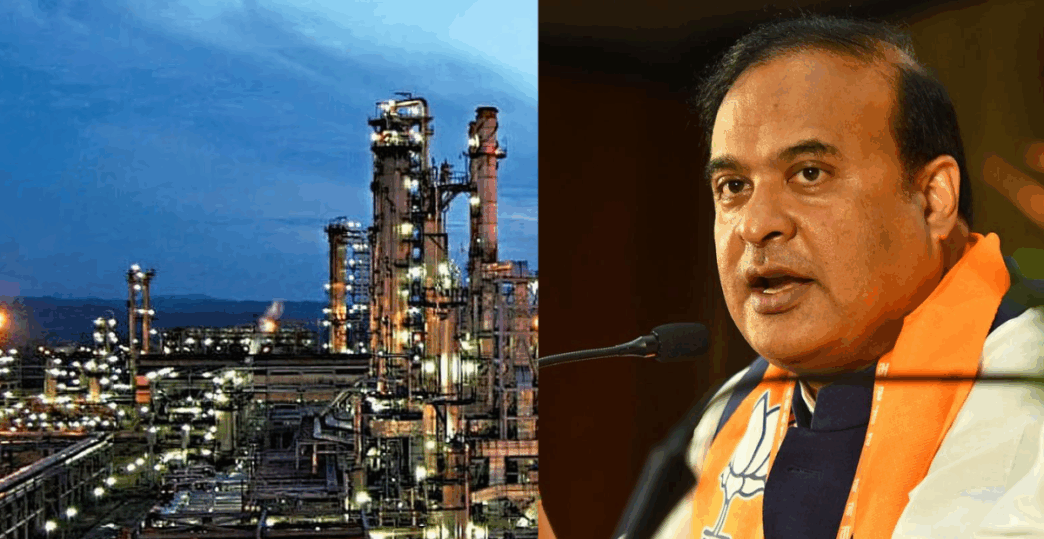
Bangladesh has finalised a plan to import 1.8 lakh tonnes of diesel from Assam’s Numaligarh Refinery Limited (NRL) by December this year under a long-term bilateral fuel supply arrangement. While the move has been welcomed by officials on both sides as a step towards energy cooperation, it has also triggered criticism in Assam, particularly from activists and observers who see a contradiction between the fuel partnership and the political language often used about Bangladeshis in the state.
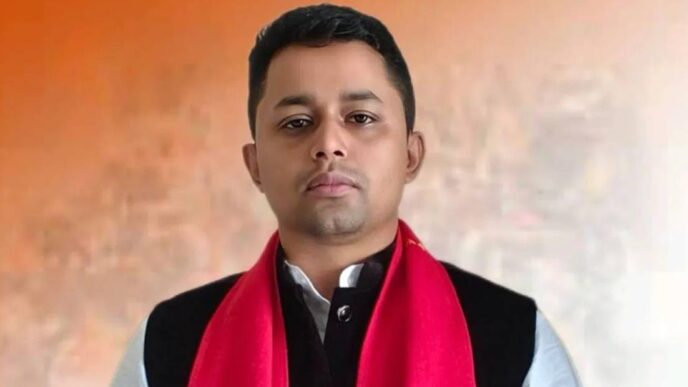
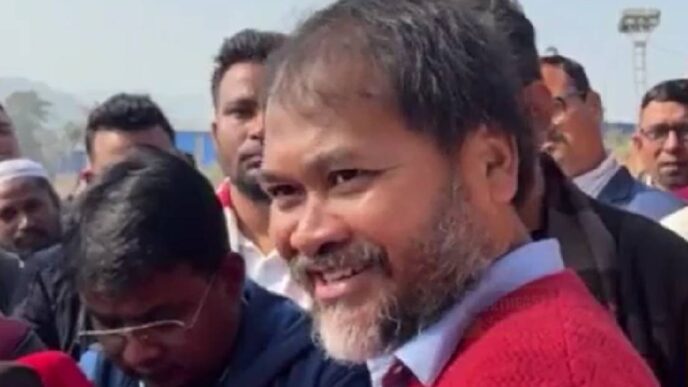
The criticism became sharper after senior journalist and environmental activist Apurba Ballav Goswami questioned the role and stand of Assam Chief Minister Himanta Biswa Sarma. He said there was a clear mismatch between the Chief Minister’s strong public remarks about “Bangladeshis” and the fact that major oil and energy cooperation with Bangladesh was continuing smoothly under his watch.
Speaking to Northeast Scoop, Goswami said:
“The Chief Minister has often used very strong words about Bangladeshis. He once said he would even break the legs of Bangladeshis. But at the same time, such a big project involving Bangladesh has been going on since 2017. So it is natural to ask how is this happening under his nose?” 
Goswami said the diesel export arrangement and other cross-border projects showed that the Assam government and the Indian government were working very closely with Bangladesh at the official and economic level. He said that while cooperation between two neighbouring countries was good and necessary, political messaging in Assam often created fear and hostility in society.
He added that when economic cooperation is quietly encouraged at the top level, but political speeches on the ground target “illegal Bangladeshis”, it sends a confusing message to people. “This contradiction must be discussed,” he said.
The latest decision on diesel import was made at a meeting of the Government Purchase Advisory Committee in Dhaka, chaired by Finance Adviser Dr. Salehuddin Ahmed. Bangladesh will pay around Tk 1,462 crore for the supply, with the price including a premium of USD 5.50 per barrel. The supply will continue under an existing 15-year agreement signed earlier by the previous Bangladesh government.
Energy and Mineral Resources Adviser Mohammad Fouzul Kabir Khan clarified that no fresh contract had been signed. The diesel will continue to be delivered through the India–Bangladesh Friendship Pipeline, which connects Assam and northern Bangladesh.
Officials say the arrangement ensures steady fuel supply for power generation, transport and industry in Bangladesh.
The diesel supply deal is not the only example of growing India–Bangladesh cooperation involving Assam. The Central Government recently approved India’s first river-bed road-rail twin-tube tunnel under the Brahmaputra connecting Gohpur and Numaligarh. The project cost is expected to be between Rs 18,000 and Rs 20,000 crore. Once completed, travel time between the north and south banks will drop from over six hours to around thirty minutes.
This project too has strategic and logistic relevance for the Northeast and for broader regional connectivity, including cross-border economic activity.
Critics say that such massive projects prove that cross-border cooperation is a long-term policy priority which makes aggressive political rhetoric against “Bangladeshis” look inconsistent.
Apurba Ballav Goswami said that political speeches should not fuel hate or confusion.
He told Northeast Scoop:
“When there is deep government-to-government cooperation with Bangladesh, then harsh statements about Bangladeshis create double standards. People must know the truth clearly. Either we are partners or enemies both lines cannot be sold at the same time.”
He said the government had upgraded and supported major supply infrastructure involving Bangladesh and that the Chief Minister was fully aware of the developments.
He stressed that cross-border energy trade is normal and expected between neighbours. The real problem arises when political language separates “official Bangladesh” and “Bangladeshis” in public discourse, he said.
The flow of people between Bangladesh and Assam has always been a sensitive topic, linked to migration debates, NRC exercises, voters’ lists and long political campaigns. Over time, the phrase “illegal Bangladeshi” has become a frequent political reference in Assam politics.
At the same time, trade between India and Bangladesh has grown sharply. Diesel, LPG, electricity and other supplies are now part of structured bilateral relations. The NRL pipeline has been described by governments as an important tool for regional energy cooperation.
This dual situation economic partnership alongside political mobilisation is what critics like Goswami find problematic. He argues that people should not be misled into believing that Bangladesh is only a source of illegal migration, when in reality it is an official trade partner.