





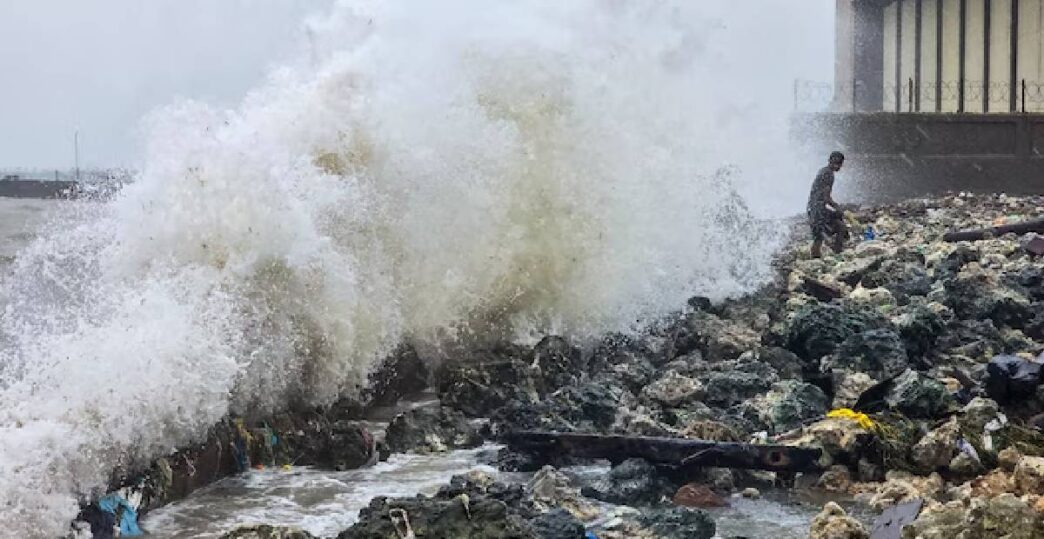
Cyclone Ditwah has brought massive destruction to Sri Lanka, leaving at least 123 people dead and more than 130 missing as the island nation faces its worst flooding in more than twenty years. Many parts of the country remain under water, and authorities have warned that the situation may worsen as the storm continues to move northward.
The Sri Lankan Department of Meteorology said that heavy rain and strong winds are expected to continue, especially in the northern and central regions. Officials urged people to stay alert through the weekend, describing the ongoing weather as an “extreme situation.” Nearly 44,000 people have been moved to state-run welfare centres after floodwaters damaged or destroyed their homes.
Rescue and relief operations are underway across the island. Armed forces are using helicopters and boats to reach stranded families. In one operation, the navy rescued 40 passengers who were trapped in sudden flash floods. The government has also cancelled the national budget debate, and the Colombo Stock Exchange shortened trading hours because of the severe weather. Schools and most government offices have been ordered to close, except for essential services. 
Several rivers, including the Kelani, Manik, and Attanagalu Oya, remain at dangerous levels. Authorities have asked residents living in low-lying regions, especially around the Kelani River in Colombo district, to move to safer ground. Mobile networks and internet services have also been disrupted in many places, adding to the difficulties faced by the public.
A special aircraft carrying aid from India reached Sri Lanka on Saturday morning with tents, blankets, hygiene supplies, and food. The Sri Lankan government has appealed to citizens abroad and international donors to extend more support as the crisis deepens.
As Sri Lanka struggles with the impact of Cyclone Ditwah, the storm is now moving toward Tamil Nadu, where it is expected to bring very heavy rain, strong winds, and possible urban flooding. The India Meteorological Department (IMD) said the system, now positioned near the southwest Bay of Bengal, may come very close to the North Tamil Nadu-Puducherry coast in the early hours of November 30.
Chennai Airport has already cancelled dozens of flights. On Saturday, 54 flights scheduled for Sunday were cancelled, including 36 domestic and 11 international services. Schools and colleges in several Tamil Nadu districts—including Perambalur, Tiruvarur, Nagapattinam, Mayiladuthurai, Cuddalore, Kallakurichi, Pudukottai, and areas in Puducherry and Karaikal—will remain closed as a precaution.
A red alert has been issued for parts of Tamil Nadu. The Regional Meteorological Centre in Chennai has forecast extremely heavy rainfall in Cuddalore, Nagapattinam, Mayiladuthurai, Villuppuram, Chennai outskirts, Puducherry, and Karaikal. Light to moderate rain is expected in many other districts, with thunderstorms and lightning in some places.
Other southern states are also likely to be affected. Andhra Pradesh may see heavy to very heavy showers in coastal regions, while Kerala is likely to get widespread rain with a few heavy spells. Telangana may also experience moderate to heavy rainfall in isolated places.
Fishermen have been strictly advised not to venture into the sea as strong winds and rough waves are expected across the Tamil Nadu-Puducherry coastline.
Sri Lankan President Anura Kumara Dissanayake has declared a state of emergency, noting that the scale of destruction requires urgent national and international assistance. With the cyclone moving toward India, both countries remain on high alert as authorities prepare for more rain, more flooding, and more challenges in the coming days.