



The All Assam Ahom Association (Sadou Asam Ahom Sabha) has come out in strong support of the Karbi community in Karbi Anglong, saying the long-standing demands of the indigenous people for land, political and socio-economic rights must be protected as guaranteed under the Sixth Schedule of the Constitution of India.
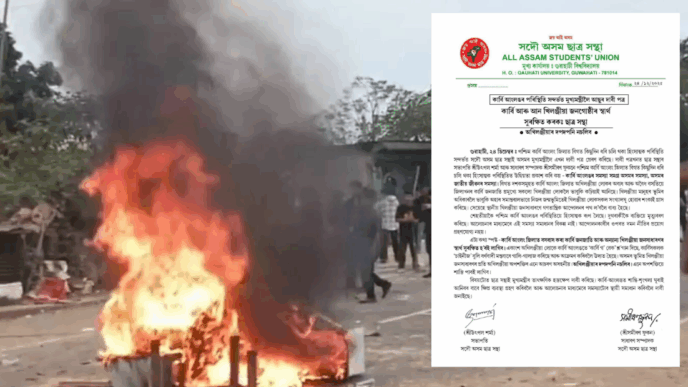
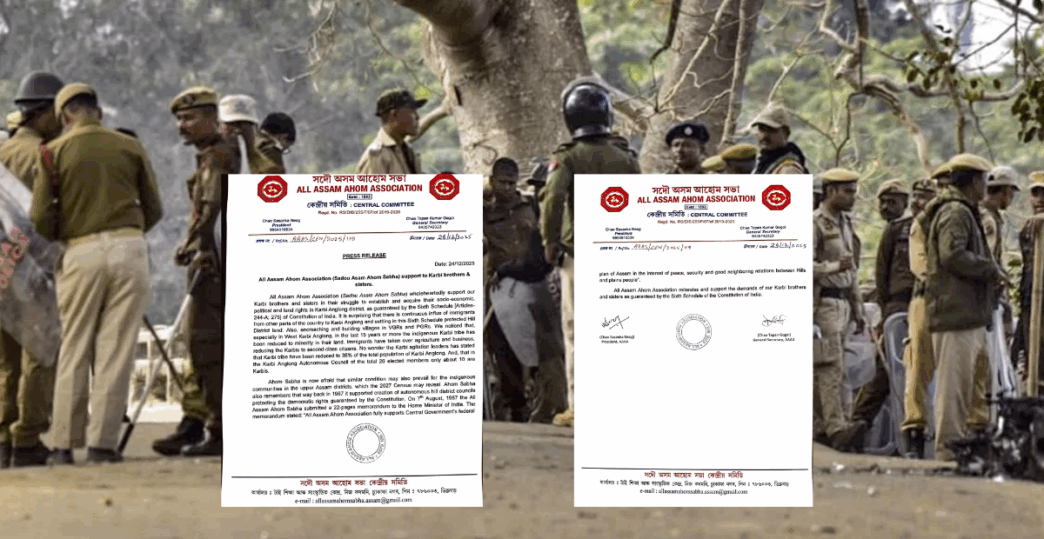
In a press release issued on December 24, the association said it stands “wholeheartedly” with Karbi brothers and sisters in their struggle to safeguard their rights in the Sixth Schedule hill district. The statement was issued by the central committee of the organisation, which was established in 1893, and is signed by its president Chao Sasanka Neog and general secretary Chao Tapan Kumar Gogoi
The Ahom Sabha expressed concern over what it described as a steady influx of people from outside Karbi Anglong over the years. According to the organisation, migrants from other parts of the country have been settling in areas that are constitutionally protected under the Sixth Schedule. It alleged that land meant for indigenous communities, including Village Grazing Reserves (VGRs) and Professional Grazing Reserves (PGRs), is being encroached upon and converted into settlements. 
The statement noted that the situation is particularly serious in West Karbi Anglong, where, according to the association, the indigenous Karbi population has steadily declined over the past 15 years. Citing claims made by Karbi agitation leaders, the Ahom Sabha said Karbis now make up only around 35 per cent of the total population of Karbi Anglong. It also pointed out that in the 26-member Karbi Anglong Autonomous Council, only about 10 elected members belong to the Karbi community.
“These figures, if correct, reflect a deep imbalance in a district that was created to protect the rights and identity of indigenous hill tribes,” the association said. It added that the loss of control over land, agriculture and local business has pushed many Karbis into a weaker position in their own homeland.
The Ahom Sabha said it fears that similar trends could emerge in other parts of Assam as well, particularly in upper Assam districts, once the next census is conducted in 2027. It warned that unchecked demographic change could threaten the social balance and traditional rights of indigenous communities across the state.
Recalling its own history, the association said it has long supported constitutional measures aimed at protecting indigenous rights. It referred to events dating back to 1967, when the All Assam Ahom Association supported the creation of autonomous hill district councils. On August 7, 1967, the organisation submitted a detailed 22-page memorandum to the then Union Home Minister, backing the federal structure and democratic safeguards provided by the Constitution.
According to the press release, that memorandum had clearly stated that the Ahom Association supported the Central Government’s federal plan for Assam in the interest of peace, security and harmonious relations between hill and plains people. The association said its present stand in favour of the Karbi community flows from the same principle.
Reiterating its position, the Ahom Sabha said the demands raised by Karbi organisations are fully in line with the provisions of the Sixth Schedule, which was designed to protect the land, culture and political rights of tribal communities in hill areas. It stressed that these constitutional safeguards must not remain on paper but should be implemented in both letter and spirit.
The association did not call for confrontation but underlined the need for fair policy decisions and strict enforcement of existing laws to prevent illegal settlement and land encroachment. It said that protecting indigenous rights is essential not only for Karbi Anglong but also for long-term peace and stability in Assam.