



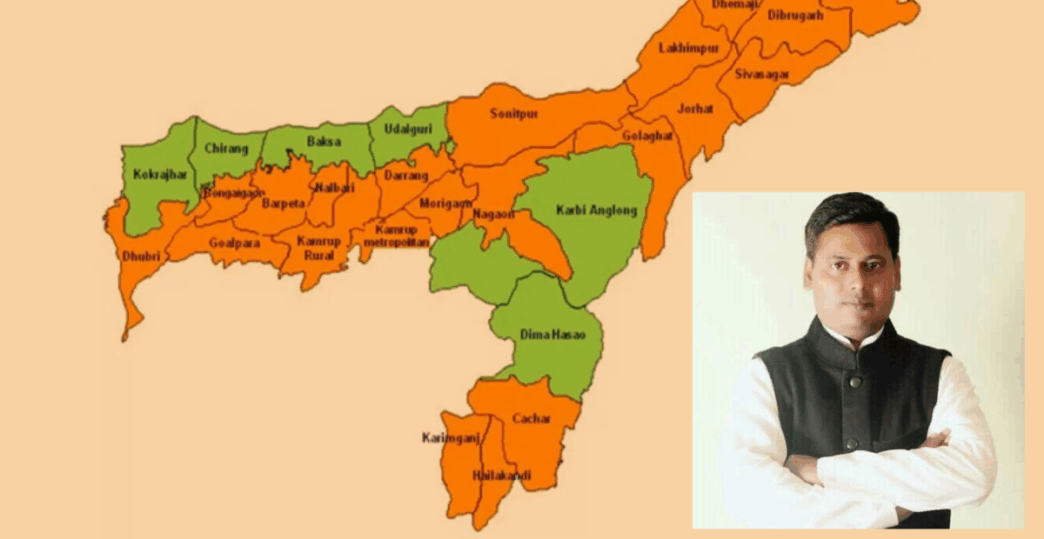
Abhayapuri constituency is witnessing a strong wave of public dissatisfaction, with anti-incumbency sentiment against sitting MLA Pradip Sarkar reported to be high. Local feedback points to governance-related issues rather than isolated political factors as the primary drivers of discontent.
Delimitation reshapes constituency dynamics
Following the recent delimitation exercise, Abhayapuri has undergone a major demographic and political transformation. The earlier division between Abhayapuri North and South no longer exists. The constituency has emerged as a Hindu-majority seat, while neighbouring Srijangram has become Muslim-majority.
Earlier, Abhayapuri North was represented by Abdul Baten Khanderkar and Abhayapuri South by Pradip Sarkar. Post-delimitation, this restructuring has altered voter expectations and accountability frameworks. Notably, Abhayapuri South, which was previously a Scheduled Caste–reserved seat, is now a general constituency. 
Development deficit a major concern
Across the constituency, residents cite a lack of visible development work. Long-standing issues such as river erosion and land encroachment remain unresolved, despite repeated representations by local communities. These problems continue to affect livelihoods and infrastructure, particularly in vulnerable areas.There is also growing concern over the absence of large-scale or transformative projects that could address employment, connectivity, or disaster mitigation.
Governance and public outreach under scrutiny
Local observers point to limited grassroots engagement by the MLA after delimitation. Constituency-level grievance redressal mechanisms are perceived as weak, with many residents claiming inadequate follow-up on complaints.
As a senior leader and Working President within his party, expectations were high that administrative coordination and constituency delivery would improve. However, these expectations, according to local feedback, have not been met.
Erosion of traditional support base
Abhayapuri has historically seen stable voting patterns among Bengali Hindu voters since the tenure of former MLA Chandan Sarkar. However, this support base is now reported to be fragmented, with dissatisfaction attributed to governance gaps rather than ideological shifts.
Conclusion
The prevailing sentiment in Abhayapuri indicates that public dissatisfaction is rooted in unmet development needs, unresolved local issues, and limited post-delimitation adaptation. Unless governance delivery improves in key areas such as erosion control, encroachment management, and public engagement, the anti-incumbency mood is expected to persist.