



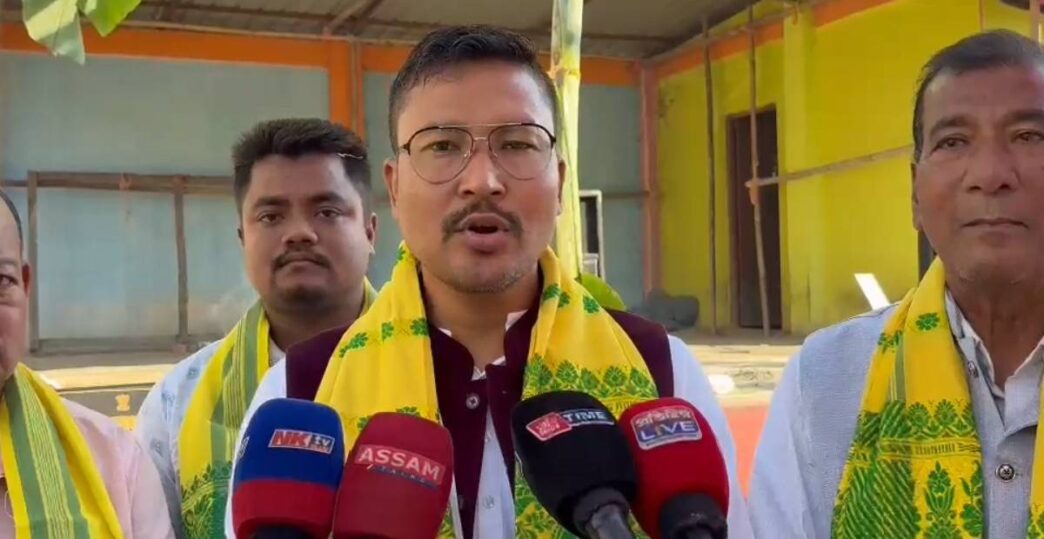
The Chief Executive Member of the Kamatapur Autonomous Council, Jibesh Rai, has expressed satisfaction with the report submitted by the Assam Government and the Council of Ministers regarding the process related to granting Scheduled Tribe status. Speaking in Chapar on Wednesday, Rai said that the Council welcomed the steps taken by the government. He also thanked Chief Minister Himanta Biswa Sarma for taking up the matter seriously.
Rai further appealed that along with the six communities being considered, the Koch-Rajbongshi community should also be granted Scheduled Tribe status at the earliest. He said that the Koch-Rajbongshis have been demanding this recognition for a long time and that the issue has remained unresolved for many decades. According to him, the community has been facing an existential crisis, and getting Scheduled Tribe status would help in addressing their long-pending concerns and problems.
The Chief Executive Member stated that many families belonging to the community have continued to struggle with social and economic difficulties. He said that the delay in granting the status has created uncertainty in the minds of the people. He urged the government to take a final decision soon so that the community does not continue to suffer. 
Earlier in the day, Rai laid the foundation stone of a drama hall at the premises of the Maa Kali Temple located at Bahalpur in Chapar. According to officials, the hall is being constructed under the Kamatapur Autonomous Council with a sanctioned amount of ₹10 lakh for the financial year 2024–25.
The programme was organised by the temple management committee. A large number of devotees and local residents were present on the occasion. Executive Member of the Kamatapur Autonomous Council, Sudhir Chandra Roy, also attended the programme along with the president and secretary of the temple committee.
Speaking at the programme, Rai said that the new hall would serve as a community space for cultural and religious events. He said that the construction of such infrastructure was important for preserving cultural traditions in rural areas. He also said that the council would continue to take up such community-based projects in the coming months.