



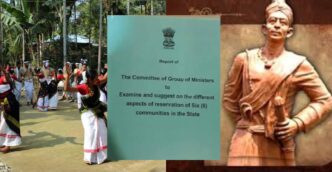
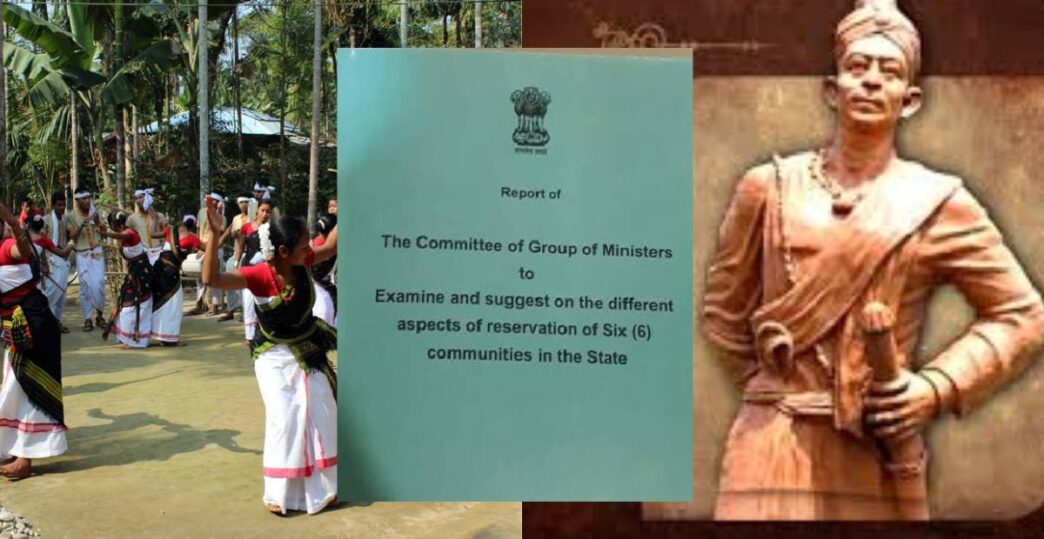
In a major development on the long-pending demand for Scheduled Tribe (ST) status by six communities of Assam, the Committee of Group of Ministers (GoM) has submitted its detailed report recommending a clear, structured approach to handle the issue without disturbing the rights of the existing tribal communities. The report, finalised in November 2025 in Dispur, lays out several key proposals to reshape the reservation framework in the state, while also explaining the limitations at the national level.
According to the GoM, the Central Government follows a single national ST list, and therefore separate categories like ST (Plains), ST (Hills) or any new category such as ST (Valley) cannot be created for central jobs or admissions. Under the present system, all ST candidates from Assam already compete in one national pool when it comes to Central Government employment and Central educational institutions. The GoM says that the state would benefit if the six communities seeking ST status are included in this common national pool, as no practical method exists to divide central-level reservations into separate sub-groups.
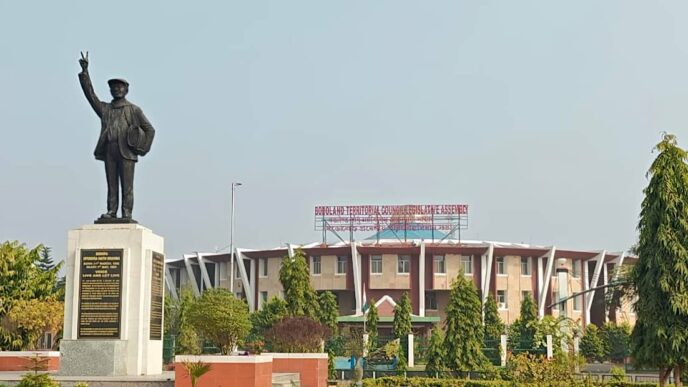
One of the key recommendations in the report is the inclusion of Moran, Matak and Koch Rajbongshi (of undivided Goalpara district) in the ST (Plains) list. The GoM notes that these communities have clear cultural and ethnographic identity, defined settlement patterns and limited overlap with other groups. It also mentions that existing ST (Plains) communities have shown relatively low levels of opposition to their inclusion. However, the inclusion of the Koch Rajbongshi community under Goalpara will require a No Objection Certificate (NOC) from the Bodoland Territorial Council (BTC) for the areas falling within the BTC jurisdiction. 
To protect both ST (Plains) and ST (Hills) groups, while accommodating the six communities that have been demanding ST status for years, the GoM has suggested the creation of a distinct ST (Valley) category. This new category would include the Ahom, Chutia, and the Tea Tribes and Adivasi communities recommended earlier for inclusion. The report says that this separate category will function the same way as the existing ST (Plains) and ST (Hills) categories at the state level and will help reorganise reservations in Parliament, the Legislative Assembly and local bodies without affecting the rights and privileges of the current tribal groups.
However, to formally establish this three-tier system—ST (Hills), ST (Plains) and the proposed ST (Valley)—the report says that special central legislation will be required. The Government of Assam will request the Centre to give statutory recognition to this arrangement. The proposal is also in line with the earlier resolution passed unanimously by the Assam Legislative Assembly which stated that the six communities seeking ST status must be included without harming the existing tribal communities.
The GoM states that the creation of the ST (Valley) category will help bring clarity, protect the interests of all communities involved, and allow the state to move forward on a sensitive issue that has remained unresolved for decades.