



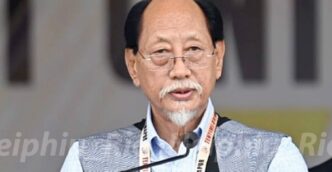
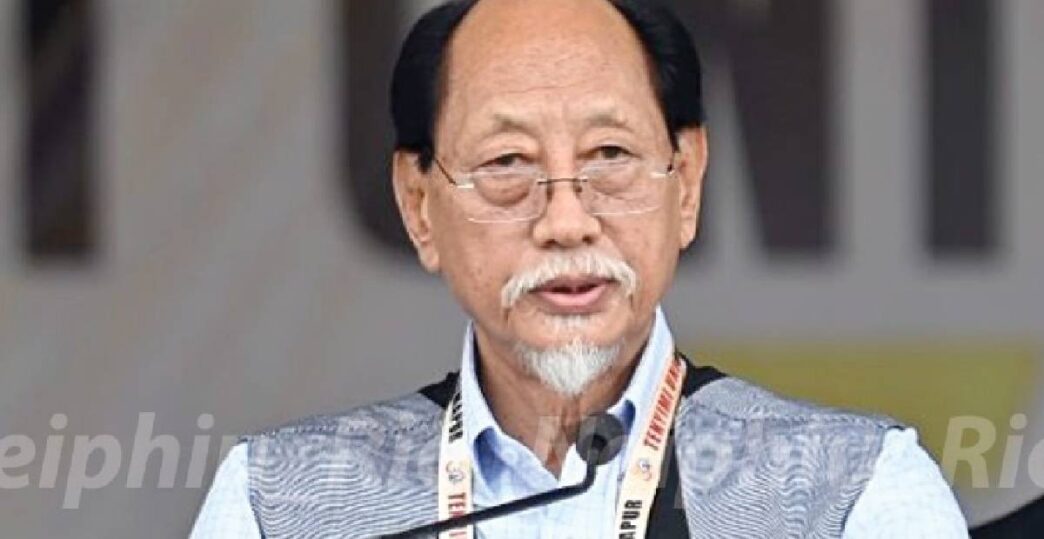
Chief Minister Neiphiu Rio has called upon all Naga organizations and communities to uphold unity and understanding while pursuing shared aspirations. Speaking at the golden jubilee celebration of the Tenyimi Union Dimapur (TUD) held at the Dimapur District Sports Council Stadium, Dr. Rio emphasized that dialogue, mutual respect, and solidarity were essential for building a stronger and more harmonious Naga society.
The event, which marked 50 years of the TUD’s formation, was attended by a large gathering, including Deputy Chief Minister T.R. Zeliang, who joined as co-host, along with community leaders, cultural groups, and representatives from across the state.
In his address, Dr. Rio congratulated the Tenyimi Union Dimapur for completing five decades of dedicated service and described the organization as “a steadfast pillar of unity and understanding” among the Tenyimi people. He said that the union’s legacy of cooperation and brotherhood had strengthened social harmony in Nagaland. 
He urged all Naga bodies—including the Eastern Nagaland Peoples’ Organisation (ENPO), Central Nagaland Tribes Council, and Tenyimi Union Nagaland (TUN)—as well as Naga communities living in Assam, Manipur, and Arunachal Pradesh to work together through dialogue and shared purpose. “Individualism, clanism, and tribalism should never overshadow our collective identity. Nagaism must be our guiding principle,” he stated.
Referring to the issue of four non-Naga tribes—Kukis, Kacharis, Garos, and Mikirs (Karbis)—Dr. Rio explained that while these groups were recognized as Scheduled Tribes in Nagaland under the 1970 constitutional order, the issuance of Indigenous Inhabitant Certificates to them was not appropriate. He said only those who settled in Nagaland before December 1, 1963, and their descendants, were eligible for Scheduled Tribe certificates within the state.
To ensure transparency, the government began an enumeration exercise on September 20, 2024, based on the recommendations of the RIIN Commission. However, the process is now under judicial review following a writ petition by organizations representing the concerned communities and a stay order issued by the Gauhati High Court.
Dr. Rio informed that recruitment for police constable posts would currently proceed only for Indigenous Naga tribes, with positions for the four other tribes to be addressed after the court’s verdict.
Highlighting steps taken to strengthen the Inner Line Permit (ILP) system, the chief minister announced that the State Government launched the Online ILP Portal on January 1, 2025. This, he said, provided a unified digital system for applications, monitoring, and enforcement. He added that updated guidelines authorized village councils to maintain registers of ILP holders, and directed all departments and law enforcement agencies to be vigilant against illegal immigration while ensuring fair treatment for lawful residents.
“Effective ILP enforcement requires cooperation from every citizen and civil society group, not just government officials,” Dr. Rio emphasized.
Deputy Chief Minister T.R. Zeliang, in his address, reflected on the enduring unity of the Tenyimi people. He said that the Tenyimi family was built on close ethnic, linguistic, and cultural bonds that had withstood the test of time. “Unity must go beyond symbolism. We must preserve our identity, strengthen our collective voice, and work together for common progress,” Zeliang said.
He also recalled that the formation of TUD in 1975 was a major milestone in bringing together Tenyimi tribes within the diverse environment of Dimapur. Zeliang encouraged the younger generation to carry forward the values of brotherhood and cooperation handed down by their forefathers.
Former chief minister and Ura Academy president, Dr. Shürhozelie Liezietsu, spoke on the historical and cultural journey of the Tenyidie language. He traced its beginnings to 1939 under the Angami Literature Committee led by Rev. J.E. Tanquist and its revival through the Ura Academy, established in 1971. Over the decades, Tenyidie has grown to become one of the most developed languages in Nagaland, now taught up to the PhD level at Nagaland University.