



Academics, researchers, and conservationists have come together to urge that the Rowmari–Donduwa Wetland Complex inside the Laokhowa Wildlife Sanctuary in Assam be given Ramsar status, which is a global recognition for wetlands of international importance. The appeal was made during a one-day workshop held on October 26 at Nowgong Girls’ College, Nagaon. The event was jointly organised by the Centre for Sustainable Development of Nowgong Girls’ College and the Kaziranga Tiger Reserve (KTR).
The workshop, titled “Conservation of Wetlands of Laokhowa Wildlife Sanctuary, Kaziranga Tiger Reserve,” was attended by over 60 participants including researchers, educators, students, forest officials, and conservationists. The session was moderated by Dr. Smarajit Ojah, Officer on Special Duty at the Directorate of Higher Education, Assam, and Ashish Saikia, Assistant Professor of Geography at Nowgong Girls’ College.
In her keynote address, Dr. Sonali Ghosh, IFS, Director of Kaziranga Tiger Reserve, said that Laokhowa and the adjoining Burhachapori wildlife sanctuaries form the buffer zone of the Kaziranga Tiger Reserve and serve as vital corridors for wild animals moving between Kaziranga and Orang. She spoke about the ecological importance of Laokhowa’s wetlands in maintaining bird diversity and natural balance. She also encouraged students and young researchers to document ecological data across the Kaziranga landscape to help in long-term conservation efforts. 
Dr. Nilutpal Mahanta, Senior Manager of WE Foundation, India, gave a detailed presentation on how to scientifically document bird species in wetland areas. He explained the importance of using proper scientific methods and long-term monitoring to track changes in biodiversity.
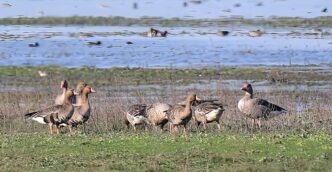
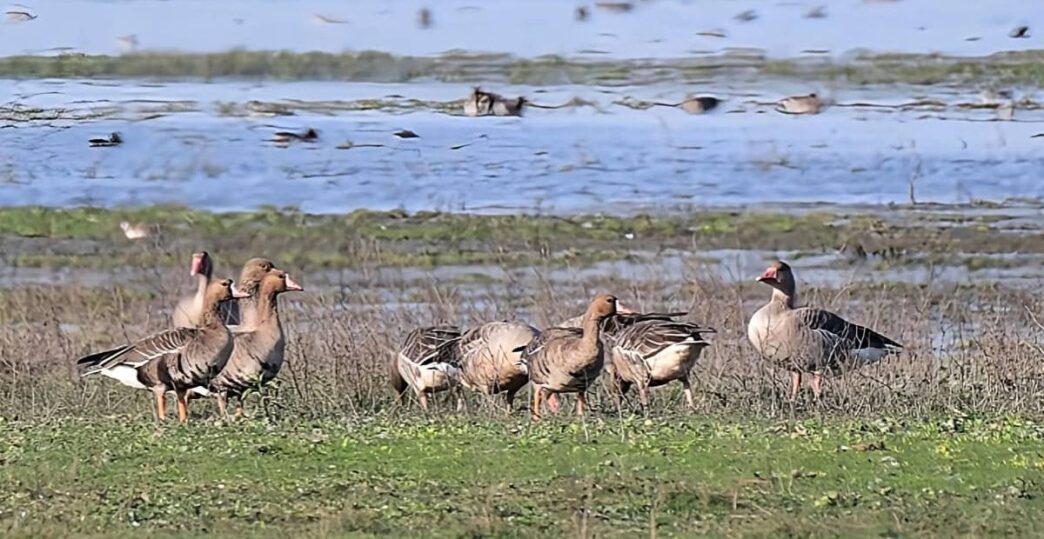
A major highlight of the workshop was a detailed presentation on the Rowmari–Donduwa Wetland Complex by Dr. Smarajit Ojah, Neeraj Bora, and Chiranjib Bora, who shared their field observations and photographic records. They revealed that several rare and globally threatened bird species such as the Knob-billed Duck, Lesser Adjutant Stork, Black-necked Stork, Ferruginous Pochard, and Common Pochard were recorded in these wetlands over the past two years. Their findings show that the area holds outstanding international ecological value.
Adding to the discussion, Dr. Bhuban Chandra Chutia from Nowgong University and Bipul Kr. Bora, retired Associate Professor of ADP College, spoke about the important role educational institutions, students, and civil society can play in conserving wetland habitats through awareness, documentation, and active participation.
Dr. Pranab Jyoti Bora, Senior Coordinator at WWF-India, and Prasanta Kr. Bordoloi, a noted wildlife documentary filmmaker, also highlighted the unique avian and wetland ecology of the Laokhowa area and its importance to the broader Kaziranga landscape.
Dilwar Hussain of the Laokhowa–Burhachapori Wildlife Conservation Society presented the historical background of the Laokhowa wetlands. He strongly appealed for the Rowmari–Donduwa Wetland Complex to be declared as a Ramsar site, citing its ecological vulnerability and the urgent need for habitat restoration and protection.
Supporting the demand, Noirrita Priyadarshini, a research scholar from Tezpur University, pointed out that the Rowmari–Donduwa Wetland Complex meets eight of the nine criteria required for Ramsar designation due to its rich biodiversity and importance for migratory bird species.
A short video prepared by Suhashini Handique, an M.Sc. student of Gauhati University, was also shown. The video included interviews with leading bird experts and field researchers such as Prachi Mehta, Sujon Chatterjee, Dr. Udayan Borthakur, Dr. Rajeev Basumatary, Anuj Saikia, and Bitupon Kolong. They spoke about their fieldwork during the 6th Waterbird Census 2025 and praised the Rowmari–Donduwa wetlands for their exceptional bird diversity and vibrant ecosystem.
During the event, a memorandum from the Assam Bird Monitoring Network was presented to the Field Director of Kaziranga Tiger Reserve. The memorandum urged the authorities to grant Ramsar status to the Rowmari–Donduwa wetlands and provide enhanced protection measures, given their high ecological potential and the large number of migratory birds found there.
The Ramsar Convention, an international treaty signed by India in 1982, aims to conserve and promote the wise use of wetlands. India currently has 93 Ramsar sites, covering more than 13.6 lakh hectares. These include well-known sites such as the Sunderban Wetland in West Bengal, Chilika Lake in Odisha, and Keoladeo National Park in Rajasthan. Assam, despite having over 3,000 wetlands, has only one Ramsar site — Deepor Beel — which was designated in 2002.
Experts at the workshop agreed that it is time for Assam to add more wetlands to the Ramsar list. The Rowmari and Donduwa wetlands together form a connected floodplain and marsh system covering around 2.5 to 3 square kilometres. According to the 6th Kaziranga Wetland Bird Census 2025, Rowmari Beel recorded 20,653 birds of 75 species, while Donduwa Beel recorded 26,480 birds of 88 species. Together, they support over 47,000 birds — even more than what was recorded at Deepor Beel. This makes the area one of the most important wetland habitats in the region.
In his closing remarks, Mr. Rajib Hazarika, Divisional Forest Officer of Nagaon Wildlife Division, appreciated the combined effort of the Forest Department, academic institutions, and conservation groups. He said such cooperation will help build a stronger foundation for protecting wetland ecosystems in Assam.