



- Bikash Chetry
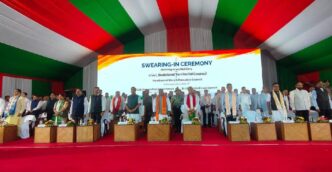
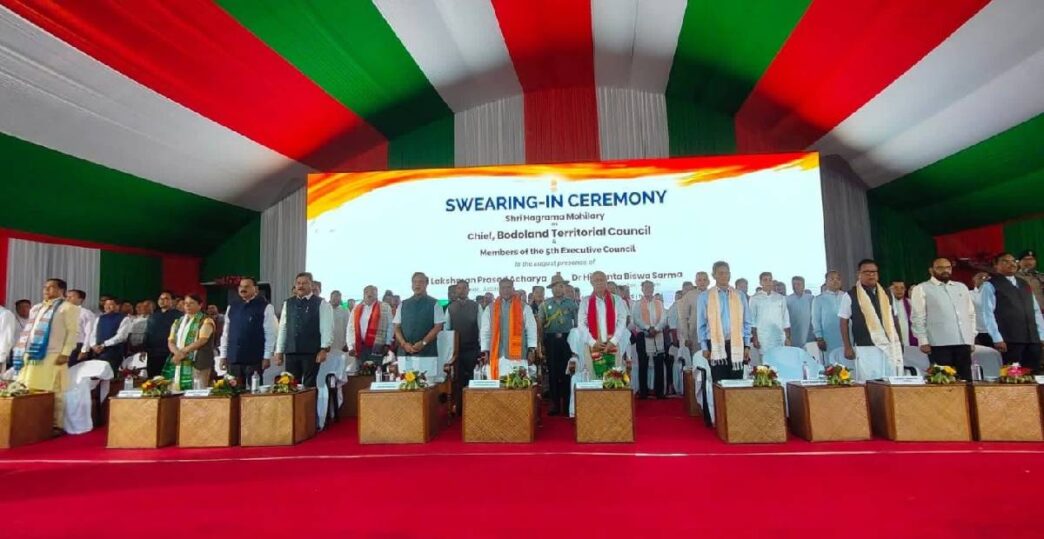
The Bodoland People’s Front (BPF) has made a dramatic return to power in the Bodoland Territorial Council (BTC), winning 28 of the 40 elected seats in the 2025 elections. The results, declared on September 27, mark Hagrama Mohilary as the new Chief Executive Member (CEM) and former Assam minister Rihon Daimari as Deputy CEM.
This victory comes five years after the BPF was ousted in 2020 by the BJP-backed United People’s Party Liberal (UPPL) alliance. It is a significant homecoming for a party that once ruled the region for 17 years. 
The Bodoland Territorial Region (BTR) includes five districts—Kokrajhar, Chirang, Udalguri, Baksa, and Tamulpur and over 31 lakh people, including Bodo tribals (35%), Muslims (23%), and other communities (42%). With only Rs 800 crore allocated annually for development, the BTC elections is seen as a bellwether for Assam’s 2026 assembly polls.
Voters expressed frustration with unfulfilled promises and fractured alliances, handing the BPF a mandate to prioritize local autonomy over external influence.
Hagrama Mohilary, the former militant leader turned politician has long been BPF’s driving force. After surrendering arms in 2003 and co-founding BPF in 2005, he led the party to dominance including 31 BTC seats in 2010 and 12 of 13 assembly seats in 2016.
What went right for the BPF ? First, strong grassroots mobilization. Despite winning only 36% of the votes (7.8 lakh), the BPF used its well-established network across rural areas of the BTR. In constituencies like Debargaon and Bhairabkunda, BPF candidates defeated rivals by more than 2,000 votes. Door-to-door campaigns focused on cultural preservation and land rights—key demands of the Bodo community since the 1980s.
Rihon Daimari’s win in Bhairabkunda, an area with ethnic tensions highlighted this resurgence. His promise of “inclusive development without weakening tribal safeguards” appealed to a region where 65% of the population is non-tribal.
Second, the party consolidated minority votes effectively. Muslims, around 6.2 lakh voters, largely supported the BPF—not out of ideology but strategy. With Congress contesting all 40 seats but failing to win any, BPF became the main anti-NDA choice.
Muslims voted BPF to prevent a BJP-UPPL victory. This shift turned a simple plurality into a clear supermajority. Even some Bodo and Hindu voters, disappointed with UPPL’s performance returned to support the BPF.
Mohilary’s narrative of “betrayal” worked well. BPF highlighted defections in 2020 that brought Pramod Boro to power and positioned itself as the protector of the Bodo Accord, promising local autonomy and practical development.
The BJP and UPPL saw their combined seats drop from 21 in 2020 (UPPL 12, BJP 9) to just 12 in 2025 (UPPL 7, BJP 5). Assam Chief Minister Himanta Biswa Sarma’s aggressive campaign, including promises of Orunodoi extensions and land rights, failed to impress voters.
BJP’s decision to contest 30 seats independently, aiming to overshadow its junior partner UPPL, backfired. In many constituencies, both parties competed on similar peace and development promises, splitting their combined vote share. Although UPPL’s 30% (6.5 lakh votes) and BJP’s 20% (4.4 lakh) exceeded BPF’s total votes, fragmentation handed BPF a clear advantage.
Governance failures were another major factor. The UPPL-BJP regime highlighted “unprecedented peace” post-2020 Bodo Accord, but locals criticized uneven development. Mega-projects like the Saralbhanga irrigation scheme and Rs 500 crore road upgrades were seen as elite-focused, leaving ordinary people behind. Unemployment in BTR remains high at 15%, double Assam’s average, forcing many youths to migrate for work.
Pramod Boro, contesting dual seats, won Goibari but lost Dotma to BPF’s Prakash Basumatary by 1,500 votes. Boro relied too heavily on BJP support, undermining BTR’s autonomy. Many voters felt he delivered only partial promises from the Accord, including stalled land rights for tribals and limited infrastructure improvements.
The BJP also stumbled. Divisive rhetoric on migrants and anti-encroachment drives alienated Muslim voters, who backed BPF to counter perceived marginalization. Allegations of land grabs by corporates and unaddressed unemployment further fueled anti-incumbency.
Alliance arrogance and mismanagement marked the campaign. Sarma’s attempts to court BPF while sidelining UPPL created distrust within the NDA.
Challenges remain, including fiscal constraints, ethnic harmony and the upcoming 2026 assembly elections. For BJP-UPPL, introspection on governance and local needs is crucial.
As BTR begins a new chapter, voters have made it clear: autonomy is earned at the ballot, not granted from above.